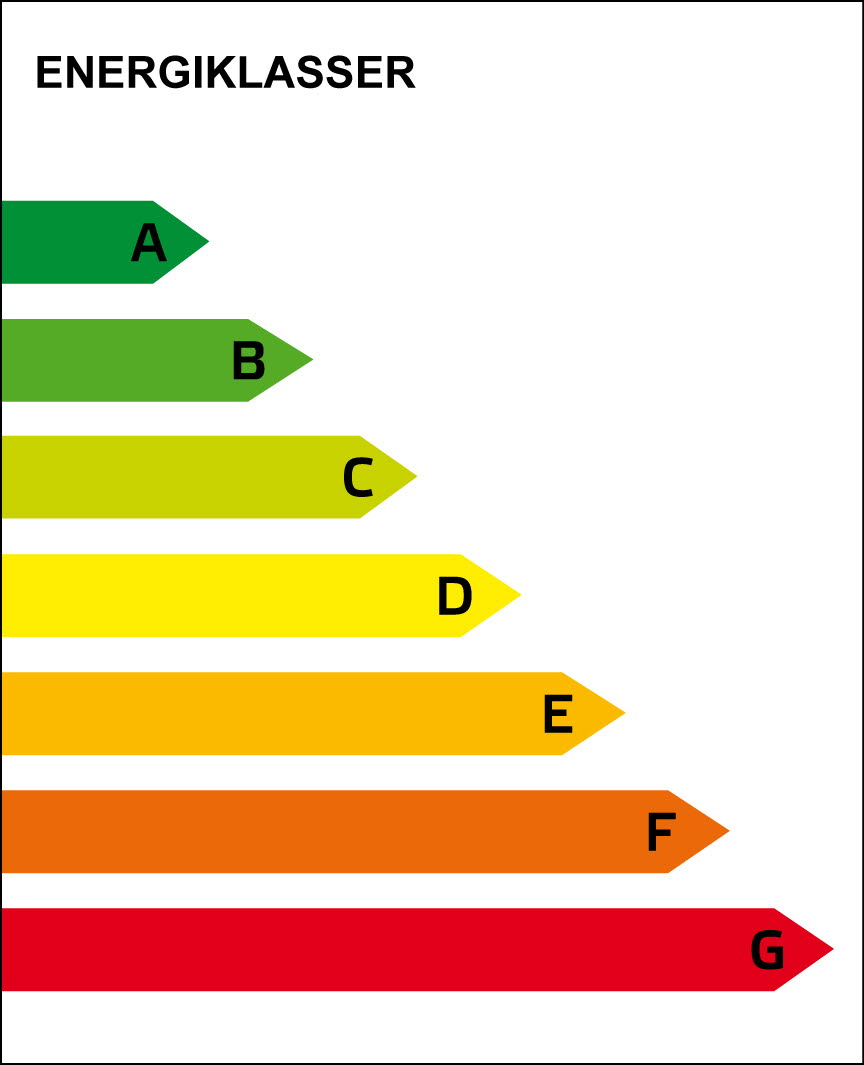
Energy Declaration
An energy declaration is a document that shows how much energy a building uses and provides recommendations for improving energy efficiency.
The purpose is to reduce energy consumption and thus environmental impact, as well as to inform about the building's energy performance when selling or renting.
When and how often
As a building owner, you may need an energy declaration (EPC) in several situations, such as when the building is leased (rental/ownership), during sale, and for certain buildings that are frequently visited by the public. The requirements and exceptions depend on the type and use of the building.
For new buildings, an energy declaration should normally be established no later than two years after the building has been put into use.
Validity Period
An energy declaration is valid for 10 years. After that, a new declaration needs to be established (if the building is subject to the requirement).
New Construction
For new construction, an energy declaration must be made no later than two years after the building has been put into use.
How to create an energy declaration?
To create an energy declaration, a certified energy expert is required. Here are the steps:
1. Hire a certified energy expert: The energy declaration should be made by a certified energy expert (certified through an accredited certification system). The energy expert collects information about the building, installations, and energy use, makes assessments/calculations, and registers the declaration in the energy declaration register.
Inspection and data collection:
2. Information gathering The energy expert collects information about the building, such as heating systems, ventilation, insulation, and energy consumption. In some cases, a physical inspection of the building is also conducted.
Analysis and calculation:
3. Analysis The energy expert analyzes the building's energy performance and makes calculations based on energy use. Recommendations:
4. Recommendations The energy declaration includes the energy expert's suggestions for improvement measures to reduce energy consumption, such as improved insulation, replacement of heating systems, or installation of solar panels.
5. Registration Once the declaration is complete, it is registered with the Swedish National Board of Housing, Building and Planning (Boverket) and thus becomes public.
Cost
The price for an energy declaration varies depending on the size and complexity of the building, with costs ranging from a few thousand kronor to about 10,000 SEK.
Prepare documentation
Ensure that you have 12–36 months of energy data (electricity, heating/cooling, hot water where relevant) as well as Atemp and larger operational changes documented. If you need help finding a certified energy expert, you can search on the Boverket website.
Enkeys measurement data and energy declarations
Enkeys energy meters can be used to create automatic reports as a basis for the energy expert. The energy goals you have set for your property, such as kWh/m², can be tracked in real-time and with historical data.
See: Boverket about energy declarations for more info.